PRI Postural Restoration — Briefing & Action Plan
TL;DR
- 🔥 TOP PRIORITY — ZOA RESTORATION. Single highest-leverage intervention. Five core exercises + 4 shoulder mobility exercises = ~35 min/day. Pre-training balloon drill (5 min before EVERY barbell session) is non-negotiable — without it, every lift entrenches PEC. Full protocol with cues, lifestyle enforcement, and timeline → ZOA Priority Protocol. Today's Tim Dempsey session prep → Tim Dempsey Prep.
- ⚠ Limited overhead reach added 28 May. Downstream consequence of PEC at the scapulohumeral level. OHP is off-limits entirely (not just lighter) until shoulder mechanics restore. Daily protocol now includes 4 shoulder-specific exercises (wall slides, lat stretch, pec minor release, T-spine extension). Wall test = self-assessment baseline; re-test weekly.
- Refined diagnosis (clinical interview 27 May 2026): Pure bilateral PEC pattern (Posterior Exterior Chain) with classic Lower + Upper Crossed Syndrome consequences. Confirmed: upper-chest + clavicle-rise + rib-flare breathing, symmetric (no Left AIC overlay), tight hip flexors + LBP. Absent: headaches, TMJ, air hunger, distal symptoms — chain is contained, protocol is simpler. One mechanical root: failed diaphragm descent / loss of ZOA. Restoring that single upstream driver collapses the downstream cascade.
- PRI / DNS is the right-fit intervention. The literature on corrective exercise for this exact syndrome is moderate-to-strong (8-week RCT 2020: significant improvements in alignment, EMG activation, scapular dyskinesis). Bilateral pattern plays directly to DNS's strengths.
- Provider ranking — re-prioritised for bilateral PEC pattern (27 May 2026):
- 🥇 Dr. Brad Sullivan, DNSP — Competitive Edge Santa Clara. DNS targets bilateral chest-breather presentations most directly — Prague School starts with bilateral developmental positions before any asymmetric work. Strongest fit for your specific pattern. Free 20-min discovery session. (408) 610-8015.
- 🥈 Tim Dempsey, PRT + Dr. Courtney Sullivan, PT — Competitive Edge San Jose. Tim has the exact PRI "Postural Respiration" course completion — the directly-named PRI course for your pattern. Pair with Dr. Sullivan for insurance billing. (408) 784-7167.
- 🥉 Jen DeLaney, MSPT — NKT Level 3 — Redwood City. Licensed PT → Anthem-billable. NKT diagnoses downstream compensations (which scapular muscle is offline) — strong second-line if you want primary-PT pathway. (408) 813-2693.
- Beatriz Torres, RPT — Schroth Senior Instructor — Palo Alto. Closest geographically but slightly over-specialised for bilateral (non-asymmetric) presentation. Still credible if you want hands-on Schroth work. (650) 494-2359.
- Definitive PRC list: Email
info@posturalrestoration.comfor the canonical PRC-credentialed PT list within 25 mi of 94301. 30 seconds, returns the authoritative answer. - Cost vs Rolfing: 8–10 PT sessions in-network with Anthem PPO ≈ $200–$500 total out-of-pocket (after deductible) vs $3,500 for the Rolfing 10-series. ~85–95% savings, plus mechanism-targeted treatment plus a take-home exercise prescription.
- Anthem PPO PT coverage (typical, verify your plan): 40 visits/benefit-year cap (some plans 45 or 60), $20–$40 copay or 10–20% coinsurance after deductible in-network, ~50–70% UCR reimbursement out-of-network via superbill. No referral required on PPO. California direct-access allows PT without MD referral for up to 12 visits or 45 days.
- Expected trajectory: Quantitative postural assessment at session 1 → individualised exercise prescription (e.g., 90/90 hip lift with balloon, all-fours belly lift, supine reach, wall serratus push-ups, chin tucks). Re-assess every 3–4 visits. Most non-pathological postural patterns show measurable improvement at 6–8 weeks with adherence.
- Caveat on the PRI brand specifically: PRI is one of several evidence-based corrective-exercise frameworks (DNS, Schroth, Janda, Foundation Training). The method matters less than the practitioner's competence. PRC-certification is a quality signal, not a magic bullet — many excellent PTs use PRI principles without the credential.
- Action items (next 7 days): (1) Call Anthem Member Services with the script in section 9 to verify your specific PT benefits; (2) Book initial eval at Therapydia Sunnyvale or BreakThrough PT Sunnyvale; (3) Take baseline posture photos (lateral + posterior, T-shirt off, against plain wall) for tracking.
Snapshot
Decision-Relevant Metrics
Your Pattern
Functional Diagnosis — Refined 27 May 2026 (clinical interview)
- Breath pattern: Upper chest + clavicle elevation + lower rib flare on inhale → pure accessory-muscle inhalation, complete loss of Zone of Apposition
- Asymmetry: None — symmetric bilateral pattern. Rules out Left AIC overlay. Bilateral resistance training has suppressed natural lateralisation.
- Lower Crossed confirmed: Tight hip flexors, low back stiffness after sitting, restricted hip extension
- Upper Crossed confirmed: Forward head, winged scapula, rhomboid strain, limited shoulder flexion / overhead reach (added 28 May — significant downstream progression of PEC into scapulohumeral mechanics)
- Sleep-disordered breathing flag: Snoring on supine sleep — positional OSA risk to evaluate
- Absent symptoms (also diagnostic): No tension headaches / TMJ / jaw clenching → cervico-mandibular system contained. No air hunger / sighing → sympathetic arousal not extreme. No knee / foot / arch issues → distal kinetic chain still compensating; you have a finite window before downstream cascade.
- Posture load: Sit-stand desk, mixed. Moderate hip-flexor exposure.
- Primary perpetuator: Heavy bilateral resistance training (valsalva bracing, OHP arch, scapular retraction patterns) entrenches PEC over years.
Working diagnosis treated as a single chained pattern with one mechanical root: failed diaphragm descent / loss of ZOA. Targeting that single upstream driver collapses the full downstream cascade.
Downstream Symptom Map
| Complaint | Underlying Driver | Tight / Overactive | Inhibited / Underactive | PRI Framework |
|---|---|---|---|---|
| Hyperlordosis | Anterior pelvic tilt | Hip flexors (psoas, RF, TFL), erector spinae (L3–S1) | Glute max, hamstrings, deep abdominals, posterior abdominal wall | Left AIC pattern; loss of left posterior mediastinum |
| Flared lower ribs | Loss of Zone of Apposition (ZOA); diaphragm orientation too vertical | Diaphragm (in shortened position), thoracic erectors, lats | Internal obliques (anterior fibres), transverse abdominis, posterior diaphragm | Hallmark of bilateral PEC or persistent AIC; failure to oppose rib expansion |
| Forward head lean | Posterior chain overactivity pulling head forward to compensate for extended T-spine | Suboccipitals, upper trap, levator scapulae, SCM (upper fibres) | Deep cervical flexors (longus colli, longus capitis), lower trap | PEC pattern; cervical extension compensation |
| Winged scapula | Loss of serratus anterior control over scapula on thorax | Pec minor, levator scapulae, upper trap, rhomboids (compensatory) | Serratus anterior (esp. lower fibres), lower trap, middle trap | Right BC pattern (more common on right); scapular dyskinesis |
| Rhomboid strain | Compensatory overuse — rhomboids forced into scapular retraction role normally done by lower/mid trap and serratus | Rhomboids (chronic isometric load), upper trap | Lower trap, middle trap, serratus anterior | Symptom, not driver — resolves when scapular mechanics restore |
| Bilateral PEC breathing | Primary upstream driver — diaphragm fails to descend; rib flare instead of internal rotation | Scalenes, upper trap, SCM, pec minor (accessory muscles), thoracic erectors, lats | Diaphragm (functionally), internal obliques (anterior fibres), transverse abdominis, posterior diaphragm | The single mechanical root. Restoring ZOA + diaphragm descent collapses the whole cascade above. |
| Limited overhead reach | T-spine locked in extension + tight pec minor → scapula can't tilt back → glenoid can't point up → arm can't clear overhead without lumbar compensation | Pec minor, lats, levator scapulae, thoracic erectors (in extension) | Lower trap, serratus anterior, thoracic flexors | Downstream PEC consequence at the scapulohumeral level. Resolves as ZOA returns + dedicated lat/pec-minor/T-spine work. OHP off-limits until restored. |
🔥 Top Priority
ZOA Restoration — Fastest Path Protocol
The single highest-leverage intervention for your entire pattern. Your six symptoms have one mechanical root: failed diaphragm descent and loss of Zone of Apposition. Restoring ZOA collapses the downstream cascade automatically. Aggressive daily protocol below is calibrated for fastest possible correction given heavy resistance-training context.
Compliance > Complexity. 5 simple exercises done 3× daily for 21 days beat 15 exercises done once a week. Build the daily habit first; refine technique with Tim.
Phase 1 — Acute ZOA Reset (Days 1–14)
Goal: get supine ZOA pattern automatic. Frequency > duration. 5 short sessions/day beat 1 long session.
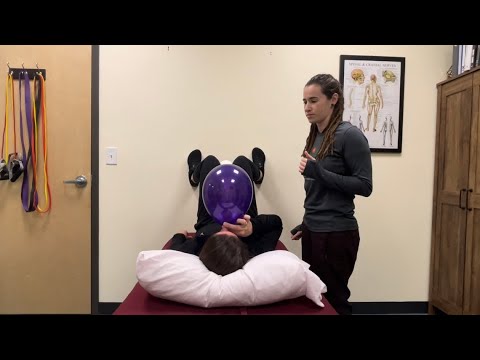
Breath: Inhale through nose 4 sec → exhale through balloon 8 sec → 1-sec pause → silent nose sip without losing belly position.
Feel: Lower back gently pressed into floor; belly hollows; sense of "ribs settling down" on exhale.
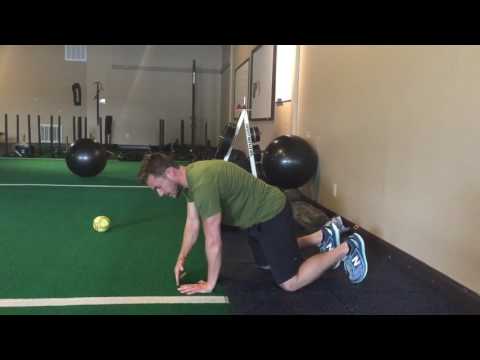
Breath: Exhale fully through pursed lips → "pull belly up to spine" → silent nose inhale without dropping belly.
Feel: Deep abdominal muscles fire; spine stays still throughout.
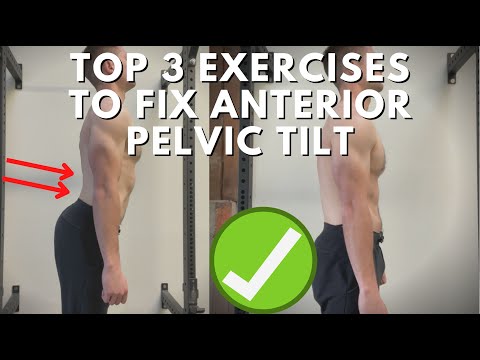
Action: Squeeze block lightly (don't crush) → posterior pelvic tilt (press low back to floor) → exhale through balloon.
Why: Adductor activation inhibits TFL/rectus femoris (the chronically tight hip flexors driving your hyperlordosis).
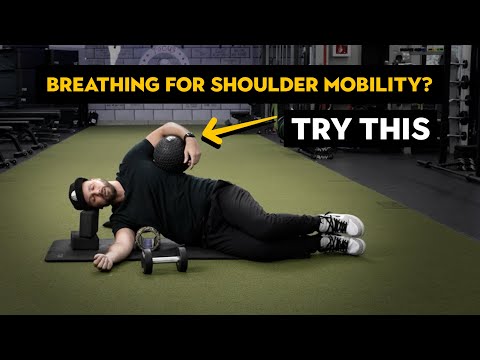
Breath: Breathe into the up-side ribcage laterally. Feel the side of your ribs spread sideways — not up toward your shoulder.
Switch sides after 6 breaths.
Why it's critical: Without this, every barbell session reinforces PEC (valsalva → locked ribcage → no diaphragm descent). With it, you've primed the diaphragm into the correct pattern before load is applied — so training reinforces (not erases) the correction.
If you do nothing else, do this.
Felt-Sense Guide — what "right" actually feels like
Added 28 May — addressing common confusions for someone moving out of chronic anterior pelvic tilt + PEC. The new pattern will feel wrong for the first 3–6 weeks because your perception has been calibrated to the old pattern. Trust the mirror and external check-ins, not the felt sense, during the recalibration window.
Don't actively tuck ribs in or down. "Stacked" = vertical alignment, not muscular squeeze. Drop an imaginary plumb line from your bottom sternum — it should land at your pubic bone, not in front of it.
Right feels like: front body slightly shorter, back body slightly longer. Possible mild stretch between sternum and navel. You've settled into the position, not held it with muscle.
Recalibration warning: for the first 3–4 weeks, neutral will feel "slumped" because your reference is anterior. Use a side-mirror or weekly side-profile photo to verify — front of bottom ribs should be roughly above (not in front of) your ASIS (front hip bones).
Powerlifting valsalva is not your starting target. You need baseline deep-core tone first — TVA + internal obliques + pelvic floor at ~20–30% engagement.
How to find it: Cough lightly. The wrap-around band of tension just below the belly button that fires at the end of the cough — that's TVA + IO. Keep that at ~20–30% as a baseline throughout the day.
Right feels like: subtle "corset" sensation. Belly is dimensionally smaller (not sucked in, not pushed out). 360° breath still possible — ribs and back expand on inhale.
Bonus: the rounded belly visibly reduces within 4–6 weeks of ZOA + TVA tone — without any abdominal exercise. Because abdominal contents settle back into proper position once the cylinder is held.
30% conscious cue, 70% skeletal settling. Active all-day posterior tilt creates new problems (glute over-clench, pelvic floor tension, hip-flexor reflex guarding).
Sitting: Find your sit bones (ischial tuberosities) by sitting on your hands palm-up. Weight on sit bones equally, slightly forward of each. Lumbar should keep a slight natural curve — don't actively posterior-tilt while sitting. Knees slightly below hips. Cue: "tall through crown of head, sit-bones into chair, soft belly."
Standing: Micro-bend knees (locked knees auto-tilt pelvis anteriorly). Pelvis neutral. Internal cue: "imagine a hook lifting up under your pubic bone." That's gentle posterior cue without overcorrecting.
Frequency: 4–6 cued resets per day, 30-sec hold each. Not every minute. Over-cueing creates guarding.
Chronic anterior tilt = chronic glute inhibition (the muscle is held lengthened all day; reciprocal inhibition from psoas/RF/TFL keeps it offline). Strength training is much less effective per rep until pelvis is more neutral.
Order of operations:
- Weeks 1–4: Activation, not strength. Single-leg glute bridges, clamshells, fire hydrants. 2×12, daily. Goal: wake the muscle up.
- Weeks 4–8: Hip extension without lumbar extension. Bird-dog, dead bug, hip thrusts with posterior tilt cue. Cue: drive hip to neutral, not into hyperextension.
- Weeks 8+: Load. Hip thrusts, sumo DL, RDL, pistol/single-leg work.
Glute bridge — right feels like: low back stays quiet. Contraction in the meaty part of the butt cheek. Hamstrings light. Quads not cramping.
Wrong: low back arches off floor, hamstrings cramp, quads burn = doing a lumbar/hamstring exercise. Reset with stronger posterior tilt cue.
- Vertical push (handstand / pseudo-planche push-up): Drop entirely until shoulder mobility restores. Sub: ring rows + push-up plus (focus on scapular protraction at top, no rib flare).
- Vertical pull (assisted one-arm chin): Keep but add scapular pull-ups (hanging shrug-down) as warmup. Don't shrug into the top.
- Horizontal push (pseudo-planche push-up): Keep, but film from the side. Stop the set the moment you see rib flare or lumbar arch.
- Horizontal pull (rows, tuck lever): Keep as-is. This is anti-PEC work — serratus + lower trap.
- Legs push (pistol / one-leg squat): Pre-load 2 sets of clamshells + glute bridges before pistols. Cue: drive heel down, hip back into space.
- Legs pull (Nordic curl): Keep but cue: pelvis tucked under, glutes squeezed, ribs over pelvis throughout. If you can't hold that, regress to good-mornings or hip thrusts until pelvis-neutral is reliable.
Shoulder Mobility Add-On — Required given your overhead-reach limitation
Self-test: The Wall Test
Add these 4 to your daily protocol
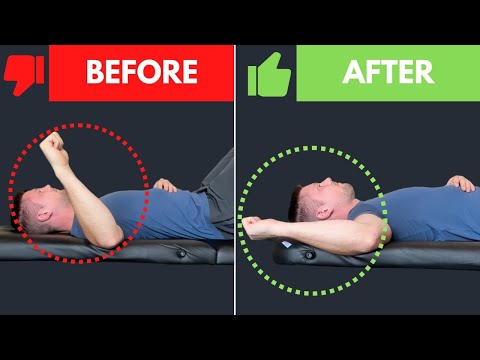
Action: Slide forearms up the wall toward "Y" position, keeping low back flat and ribs not flaring. Slide back down. Pair with balloon exhale on the way up.
Critical: If your low back arches or ribs flare, you've gone past your current range — stop there and only slide within your true ROM.
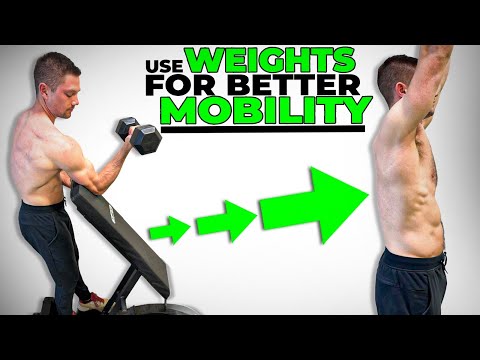
Action: Let chest sink down between arms; breathe into back ribs (exhale through pursed lips). You should feel a clear stretch through both lats / sides of body.
Why: Tight lats are the #1 restrictor of overhead reach in resistance-trained men. Posterior expansion breath during the stretch amplifies the effect.
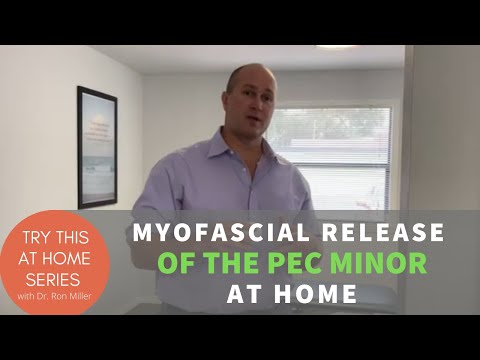
Action: Apply moderate pressure, breathe slowly, and very slowly raise and lower your arm 5–8 times while staying on the tender spot. Then hold static for 30 sec.
Caution: Avoid going too deep medially — the brachial plexus and axillary artery run nearby. Stay over the muscle, not into the armpit.
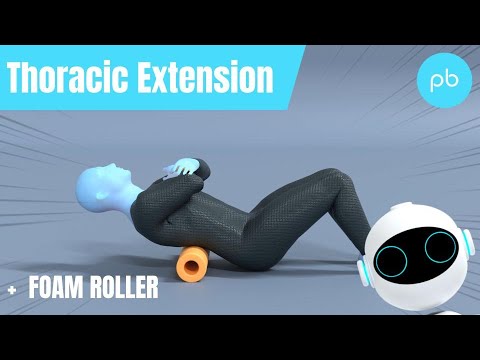
Action: Slowly lean back over the roller, keeping ribs down (do not flare) and low back flat (do not arch). Hold 8 sec at end-range, then return. Inch roller up 2–3 cm and repeat for 5 positions covering T4–T10.
Critical cue: The motion comes from T-spine, NOT from lumbar arching. If you feel it in your low back, ribs are flaring or hips have lifted — reset.
Phase 2 — Consolidation (Days 15–42)
Once supine ZOA is automatic (typically Day 14–21), translate to upright postures:
- Standing Wall Hinge with Balloon — back against wall, hinge into mini-squat, maintain ZOA breath. Trains the bracing pattern you need under load.
- Glute Bridge Pullover — bridge with knee squeeze + overhead reach + balloon exhale. Integrates posterior chain + ZOA + scapular reposition.
- Wall Serratus Push-Up Plus + ZOA — wall push-up emphasising scapular protraction at lockout, with balloon breath. Re-activates serratus, takes load off rhomboids.
- Bilateral Hip Flexor PNF — half-kneeling, posterior tilt, contract-relax stretch. Releases the iliopsoas + rectus femoris that perpetuate hyperlordosis.
Phase 3 — Barbell Integration (Days 30+ and indefinitely)
- Squat / Deadlift bracing: Inhale 360° (lateral + posterior expansion, no rib flare, no upper chest rise) before descent → controlled exhalation through pursed lips during concentric → reset between reps. Drop weight 10–15% during retraining; build back.
- OHP: Posterior pelvic tilt cue throughout. Ribs stay stacked over pelvis. If you have to arch your back to clear the lift, the load is too heavy or your scapular upward rotation is broken — fix that first.
- Bench: Scapular protraction at lockout (not perpetual retraction). Allow the scapula to glide on the ribcage instead of being pinned.
- Accessory work: Add bilateral pull-overs with light DB to maintain T-spine extension + lat lengthening. Add face-pulls 3× / week for lower trap + posterior delt.
Sleep Positions — Revised for your snoring history
✓ Best for you: Left side-lying with pillow between knees
Reduces airway collapse (no snoring), supports cardiac/lymphatic drainage, doesn't disrupt sleep. Pillow between knees keeps hips/pelvis stacked and prevents the top leg from twisting your lumbar. This is your primary recommendation. Optional: hug a body pillow against your chest to keep top arm supported and prevent unconscious rolling to prone.
📷 See clear position diagrams: Sleep Foundation — Best position for lower back pain · Mayo Clinic — Sleeping positions that reduce back pain
⚠ Supine with pillow under knees — optimal for lumbar, NOT recommended for you
Knee pillow tilts pelvis posteriorly and reduces lumbar lordosis. However: your snoring on back indicates this position causes airway collapse. Only return to supine after a sleep study clears positional OSA risk (or after positional therapy with a vibrating wedge/Night Shift device). For now: skip supine entirely.
✗ Avoid — Prone (stomach)
Locks lumbar into hyperextension for 7+ hours and forces head rotation (cervical strain). Worst position for your pattern. If you wake up in this position, train yourself out of it: hug a body pillow against your chest (prevents rolling), use a sleep tracker with positional alarm (Somnox, Apple Watch sleep settings, or a tennis ball sewn into pyjama back as the old-school trick).
Posture Cues — Wrong vs. Right (Conor Harris explainer)
Conor Harris explains this better than any text can. Watch the video below — it shows exactly what rib flare looks like and how to fix it. Two minutes:
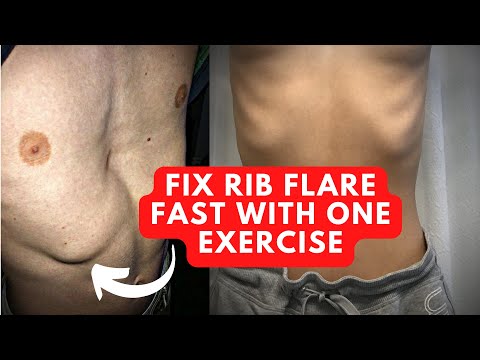
The cue you were probably taught your whole life. Forces rib flare (lower ribs jut forward), lumbar hyperextension (low back arches), anterior pelvic tilt, and scapular adduction that locks the scapulae. This is your existing pattern — stop using this cue immediately.
Ear, shoulder, hip, knee, ankle — stacked vertically. Imagine your ribcage is a glass of water balanced on your pelvis — don't tip it forward. Micro-bend knees. Breathe so your back ribs expand against an imagined wall behind you. The ribs descend passively as a consequence — never force them down with abs.
📖 Deep-dive reading from Conor Harris: The Best Posture-Fixing Guide On The Internet · The Massively Underrated Role Of Breathing In Posture · The No B.S. Guide To Anterior Pelvic Tilt
STOP IMMEDIATELY — these 4 things actively make PEC worse
Every rep actively forces rib flare (lower ribs pull down toward pelvis) and hip-flexor dominance — the exact two things you're trying to correct.
Replace with: dead bug, all-fours belly lift (Exercise 2 above), plank with posterior tilt, hollow-body holds.
Holding breath against closed glottis with no exhalation, ribs locked in extension, lumbar over-arched. This is the training pattern that built your PEC.
Replace with: 360° inhale before descent → controlled exhale through pursed lips during concentric → reset between reps. Ask Tim about ZOA-preserved bracing.
Given your limited overhead reach, OHP is not just a "drop weight 30%" situation — it's off the table entirely until shoulder mechanics restore (see Shoulder Mobility section). Every rep arched-back-to-clear-the-bar is a rep entrenching PEC.
Temporary replacements: Landmine press (angle is forgiving on shoulder flexion), single-arm DB press at incline not vertical, half-kneeling cable press. Return to barbell OHP only when wall test clears.
Open-mouth cardio recruits scalenes + upper trap + SCM to drive ventilation through chest expansion — exactly the accessory muscles you're trying to demote.
Replace with: nasal-only breathing during all Z2 cardio for 6+ weeks. Slow the pace down if you have to. Forced diaphragm primacy. (Worth googling "Patrick McKeown nasal breathing" for the full protocol.)
Realistic Timeline — What You Should Feel
| Window | Expected Experience |
|---|---|
| Day 1–7 | Effortful awareness of breath; the new pattern feels foreign. Possible micro-soreness in deep abdominals. Keep doing it — this is normal. |
| Day 7–21 | Supine ZOA becomes automatic. Possible transient fatigue or mild headache (parasympathetic shift + accessory respiratory muscles releasing chronic load). Sleep quality may noticeably improve. |
| Day 21–42 | Visible reduction in rib flare. Hip-flexor tension drops. Standing ZOA returns. Forward head posture improves spontaneously as accessory muscles release. |
| Day 42–84 | Pattern integrates into barbell training. Bracing pattern feels different — initially weaker, then equally strong with better control. Rhomboid strain resolves as serratus re-activates. |
| Day 84+ | Maintenance phase. 1× morning supine 90/90 (~5 min) + pre-training balloon drill (~5 min) preserves the gains indefinitely. |
Today's Session
Tim Dempsey (Competitive Edge San Jose) — Session Prep
Tim is PRT (Postural Restoration Trained) + DNSET (DNS Exercise Trainer) + CSCS. The only Bay-Area provider with both formal PRI and DNS credentialing. Trainer-level credential (not PT) so this session is movement/exercise focused, not insurance-billable as PT. Pair with Dr. Courtney Sullivan, PT, DPT, OCS at same clinic for billable clinical side.
Disclose upfront
- Confirmed bilateral PEC pattern (no Left AIC asymmetry) — validated via clinical interview
- Symptoms: hyperlordosis, flared lower ribs, forward head, winged scapula, right rhomboid strain
- Breath: upper-chest + clavicle rise + lower rib flare on inhale (pure accessory-muscle pattern)
- Lower Crossed: tight hip flexors, low back stiffness after sitting
- Limited shoulder flexion: cannot raise arms straight overhead — known and disclosed. Likely tight lats + pec minor + locked T-spine extension blocking scapular upward rotation. Compensate with lumbar arch when forced overhead.
- "Rib stacking" is an alien concept: ribs have sat anterior to pelvis for most of life. Neutral position currently feels "slumped" or "wrong." Perception is calibrated to the old pattern — will need external cues (mirror, photos, tactile feedback) for the first 6+ weeks.
- Weak / disconnected deep core: rounded belly from hyperlordosis. TVA + internal obliques not reliably "switched on." Concept of "bracing" feels foreign — currently doesn't know what 20–30% tone should feel like vs. powerlifting valsalva.
- Underdeveloped glutes despite regular glute work (bridges + calisthenics programme). Chronic anterior pelvic tilt = chronic glute inhibition (reciprocal inhibition from short psoas/RF/TFL). Glute strength likely capped until pelvis returns to neutral.
- Overthinking the postural cues: currently uncertain about correct sit-bone position when sitting, how much active posterior tilt during standing, when to "cue" vs let the body settle. Wants a clear felt-sense framework that doesn't lead to over-bracing or guarding all day.
- Absent symptoms: no headaches, TMJ, air hunger, knee/foot issues — chain is contained at trunk + shoulder level (snoring on back IS present — flagged separately)
- Training: heavy bilateral resistance — squat / deadlift / bench, multiple sessions/week. OHP currently dropped due to shoulder mobility limit.
- Plus calisthenics: Jack H. Woods 6-movement bodyweight programme 3×/week (horizontal/vertical push + pull, pistol squat, Nordic curl). Vertical Push currently held at Wall Push due to overhead-reach gate. Regular glute bridges in the posture block. v23 of programme now includes pre-training balloon drill + 3 shoulder mobility exercises.
- Active protocol: CJC-1295 / Ipamorelin SQ injections (relevant for tissue plasticity window)
- Sleep: snores on back — using left side-lying as primary; sleep study pending consideration
- Posture load: sit-stand desk, mixed daily
- Goal: fastest possible ZOA restoration integrated into ongoing training, plus shoulder mobility recovery for OHP return, plus a clear tactile framework for rib stacking + core tone + glute activation that doesn't require constant conscious effort
Questions to ask Tim (in priority order)
- "Can you assess my current ZOA position with a Hruska Adduction Lift Test (or your preferred test) and tell me where I sit on the spectrum?" — establishes baseline.
- "Which 3–5 home exercises will give me the highest yield in the first 14 days?" — calibrates the daily protocol.
- "What exhalation pattern do you want me to lock in — 4-2-8, 4-1-8, or something else?" — gets his preferred breath cadence.
- "What cues do you want me to use when bracing under load on squat, deadlift, bench — so I'm not reinforcing PEC every training session?" — most important question. The training is the perpetuator.
- "Can you assess my scapulohumeral rhythm and tell me what's driving the limited overhead reach — pec minor, lats, T-spine, or all three? And how do I structure shoulder mobility work alongside the ZOA protocol?" — addresses the shoulder limitation specifically. Get a wall-test baseline measurement.
- "How do I actually find 'ribs stacked over pelvis' in real time? Can you give me a tactile cue — hand placements, mirror check, or specific feel — so I can self-correct throughout the day without overthinking?" — addresses the recalibration problem. The concept is alien; needs a kinesthetic anchor, not just a mental cue.
- "My deep core feels disconnected — rounded belly, can't reliably 'switch on' TVA and internal obliques. How do you teach the right baseline tone (not full valsalva), and what's the test that tells me I've got it?" — addresses the bracing confusion. Ask him to demonstrate the cough-test or his preferred wake-up cue.
- "My glutes are underdeveloped despite regular glute bridges + calisthenics work. Is it the chronic anterior tilt inhibiting them, my recruitment pattern, or volume? What activation drills do you want me running before pistols and deadlifts?" — addresses the glute amnesia. Confirms whether to pulse vs sustain glute tension, plus glute-med-specific drills.
- "Sitting and standing — where should the weight sit on the sit bones, how active should my posterior pelvic tilt be, and how do I know I'm not over-cueing?" — the daily-life calibration question. Get the 70/30 rule confirmed or refined.
- "Realistic timeline — when should I expect visible rib-flare reduction, hip-flexor release, and the rounded belly to recede?" — anchors expectations. Note the belly shape question specifically — TVA tone + ZOA + pelvic neutral should resolve it without abdominal training.
- "Should I pair you (PRT/movement) with Dr. Courtney Sullivan, PT for the insurance-billable clinical side? Or do you recommend a different PT?" — splits movement vs PT efficiently.
- "What am I doing in my current training (both barbell and Jack Woods calisthenics) that's making this worse?" — gets the specific Stop-Doing list across both training modalities.
- "What's the maintenance protocol once we hit baseline ZOA — and how do I prevent regression?" — long-term plan.
Background
What PRI Is — and Isn't
What PRI Is
- Founded 1999 by Ron Hruska, PT, in Lincoln, Nebraska
- A clinical framework built on the observation that humans are structurally asymmetric (liver on right, heart leaning left, dominant respiratory diaphragm on right) and develop predictable compensation patterns from this asymmetry
- Treats patterns labelled L AIC (Left Anterior Interior Chain), R BC (Right Brachial Chain), PEC (Posterior Exterior Chain) — most of the population presents some combination
- Central concept: Zone of Apposition (ZOA) — the area of diaphragm in contact with the inner ribcage. When ZOA is lost (vertical diaphragm position), ribs flare, abdominals can't anchor, posture cascade follows
- Credentialing: PRC (medical/rehab — PT, OT, chiro, AT) vs PRT (movement/fitness — trainer, S&C coach, Pilates, yoga). PRC = appropriate for clinical postural work
- Treatment combines manual repositioning + breath retraining + active exercise prescription (90/90 hip lift, all-fours belly lift, supine reach, etc.)
What PRI Isn't
- Not the only valid framework. DNS (Dynamic Neuromuscular Stabilization, Prague School), Schroth (scoliosis-focused), Janda's crossed-syndromes model, Foundation Training, and SFMA-guided corrective exercise all address overlapping patterns competently
- Not heavily RCT-validated as a branded method. The underlying principles (ZOA physiology, corrective exercise for crossed syndromes) have RCT support; "PRI" as a packaged brand has fewer head-to-head trials
- Not magic — requires patient adherence. The home exercise prescription is the active ingredient. Passive in-clinic manipulation alone won't durably change posture
- Not a substitute for strength training. PRI restores positional capacity; you still need posterior chain strength, scapular endurance, and core integration through resistance training
- Not appropriate for structural scoliosis >25° Cobb angle (refer to Schroth-trained PT for that) or for acute spinal pathology (refer to ortho/spine surgeon)
Credentials
Postural-Chain Credentials to Look For
Tier 1 credentials are mechanistically equivalent to PRI for your pattern. Tier 2 credentials are complementary — different lens, overlapping outcomes, often combined with Tier 1. Use these as search keywords when calling clinics.
Tier 1 — Direct PRI equivalents (substitutable)
| Credential | Framework | Why It Fits Your Pattern |
|---|---|---|
| PRC / PRT | Postural Restoration Institute (PRI), Lincoln NE · Hruska 1999 | Direct match. PRC = clinical (PT/OT/Chiro/AT). PRT = movement-pro (trainer/Pilates/yoga). Both target ZOA, L AIC, PEC chains. |
| DNSP / DNSET | Dynamic Neuromuscular Stabilization (Prague School) · Pavel Kolar, PT, PhD | Sibling framework. Same diaphragm-keystone mechanism, developmental-kinesiology language. Many clinicians use PRI + DNS interchangeably. DNSP is the clinical credential. |
| Schroth C1, C2, Senior Instructor | BSPTS (Barcelona Scoliosis PT School) or SSOL Schroth Best Practice · Katharina Schroth 1920s | Developed for scoliosis but treats any 3D asymmetric postural pattern via specific breath patterns + corrective exercises. Senior Instructor = highest tier. Many Schroth PTs see non-scoliotic adults with postural complaints — worth asking. |
| Janda-trained | Vladimír Janda, MD (Czech, 1970s) | The parent framework for everything above. Upper Crossed + Lower Crossed Syndromes were defined by Janda. No formal credential — look for "Janda manual muscle testing" or "Czech-school manual therapy" in a PT's CV. |
Tier 2 — Complementary postural-chain frameworks
| Credential | Framework | Why It Helps Your Pattern |
|---|---|---|
| NKT Level 1, 2, 3 | NeuroKinetic Therapy · David Weinstock, 1985 | Manual muscle testing to identify which muscle is compensating for which. Directly diagnoses your rhomboid-compensating-for-failed-serratus problem. Level 3 = highest. Level 3 + Teacher Assistant = teaches the certification. |
| ELDOA Trainer / Therapist / Expert | Étirements Longitudinaux avec Décoaptation Ostéo-Articulaire · Guy Voyer, DO (French osteopath) | Specific postures held ~1 min that decompress and re-align spinal segments. Strong for hyperlordosis and disc-decompression specifically. ELDOA Therapist/Expert = deeper than Trainer. |
| FRC / FRA / Kinstretch | Functional Range Conditioning · Dr. Andreo Spina (FAS — Functional Anatomy Seminars) | Joint-level mobility through active range. Pairs well with Tier 1: PRI/Schroth repositions; FRC builds strength through the new range so corrections survive your barbell training. Critical for maintenance phase. |
| 3DMAPS / AFS / GIFT | Applied Functional Science · Gray Institute · Gary Gray | 3D movement chain analysis. Strong on rotational and tri-planar patterns. AFS Certified = baseline; GIFT (Fellowship) = depth. |
Quality-signal credentials (not method-specific)
Evidence
What the Literature Supports
| Evidence layer | What it supports | Strength |
|---|---|---|
| Crossed-syndromes corrective exercise (Janda framework) | 8-week comprehensive corrective exercise program for Upper Crossed Syndrome (Bayattork et al., 2020, Sci Rep, n=24): statistically significant improvements in alignment, EMG activation of mid/lower trap and serratus, scapular dyskinesis test, and head/shoulder/thoracic angles. Improvements partially maintained at 4-week follow-up. | RCT |
| Zone of Apposition (ZOA) physiology | ZOA mechanics well-characterised in pulmonary physiology literature. Loss of ZOA documented in COPD/hyperinflation; restoration via positional and breath training improves rib mechanics and diaphragm function. | Established |
| Diaphragm + posture coupling | Postural function of diaphragm and its role in spinal stabilization is established (Hodges, Kolar, Frank et al.). Diaphragm dysfunction → low back pain risk; reactivation improves trunk control. | Established |
| Scapular dyskinesis correction | Multiple RCTs and systematic reviews show targeted serratus anterior + lower trap activation programs improve scapular kinematics, reduce shoulder pain, and resolve compensatory rhomboid overuse. | RCT/SR |
| Anterior pelvic tilt correction | Combined hip flexor stretching + posterior chain strengthening + abdominal activation reduces pelvic tilt angles in multiple controlled trials. | RCT |
| PRI as branded method (head-to-head) | Limited direct RCTs comparing PRI vs other postural rehab methods. Mechanistic studies and case series support; large branded-method RCTs are absent. | Limited |
Local Providers
Palo Alto + Adjacent Shortlist — Updated 27 May 2026
taylorphysicaltherapy@gmail.com) implies she's a licensed PT — needs verification. Same top-tier NKT credentialing as Jen DeLaney.Backup NKT-L3 Pool (Peninsula)
If Jen DeLaney and Taylor Miller are unavailable, NKT-L3 density is unusually high on the Peninsula. Most below are listed on the official NKT directory; verify PT credential status before booking if you need insurance billing.
Tier 2 — ELDOA & Maintenance Phase (Adjuncts)
Existing Picks (Still Valid Alternatives)
Insurance
Anthem Blue Cross PPO — What You Can Claim
CPT codes you'll see on your bill
| Code | Description | Typical Use in Your Care |
|---|---|---|
| 97161 | PT evaluation — low complexity | First visit if straightforward postural assessment |
| 97162 | PT evaluation — moderate complexity | Most likely code for your initial eval (multi-region pattern) |
| 97163 | PT evaluation — high complexity | If multiple comorbidities / complex movement disorder |
| 97110 | Therapeutic exercise | Most home-program exercises (15-min units) |
| 97112 | Neuromuscular re-education | Breath retraining, ZOA work, motor control drills |
| 97140 | Manual therapy | Hands-on diaphragm release, manual rib repositioning, soft-tissue mobilisation |
| 97530 | Therapeutic activities (functional) | Integration phase — squat/deadlift retraining with PRI cueing |
| 97535 | Self-care/home management training | Teaching the home exercise program |
Call Anthem Member Services — exact script
Call: Number on the back of your card (likely 1-800-888-8288 for CA PPO commercial). Say "Member Services" at the prompt. Have your member ID ready.
- "I want to verify my outpatient physical therapy benefits. Can you confirm:
- The number of PT visits covered per benefit year on my plan
- Whether the limit is PT-only or combined PT/OT/ST
- My in-network copay or coinsurance per PT visit
- My in-network deductible status and remaining amount
- Out-of-network PT benefits — UCR percentage and OON deductible
- Whether prior authorization is required, and after how many visits
- Whether direct-access (no MD referral) is supported on my plan
- "Are codes 97161, 97162, 97163, 97110, 97112, 97140, 97530, and 97535 covered under my PT benefit?"
- "For [Therapydia Sunnyvale / BreakThrough PT Sunnyvale / Stanford Health Care PT], can you confirm they are in-network under my plan?" (Have NPI or address ready — they'll look it up.)
- "Please note the reference number for this call so I can quote it if there's a claims dispute."
Tip: If they quote a coverage number that doesn't match your Summary of Benefits, ask them to escalate. Member-services reps occasionally misread coverage tables.
Side-by-Side
PRI Physical Therapy vs Rolfing 10-Series — Your Decision
| Dimension | PRI / Postural PT | Rolfing 10-Series (Kempf) | Winner |
|---|---|---|---|
| Evidence for your specific pattern | Moderate-Strong (RCTs on UCS/LCS corrective exercise; ZOA physiology established) | Weak (NHMRC 2024 = insufficient evidence; Harvard pilot null on pain) | PRI |
| Mechanism targeted to your pattern | Yes — explicitly addresses ZOA, anterior tilt, scapular mechanics | Generic fascial reorganisation; not pattern-specific | PRI |
| Out-of-pocket cost (in-network) | $200–$500 (after deductible, 8–10 visits) | $3,500 cash (not insurance-reimbursable) | PRI (~85–95% less) |
| Take-home exercise program | Yes — core deliverable | No formal HEP; movement coaching optional add-on | PRI |
| Durability of effect | Higher (HEP consolidates change; literature supports 4-week+ retention) | Lower (effect not characterised; often requires periodic "tune-ups") | PRI |
| Manual / hands-on component | Yes (CPT 97140 manual therapy) but typically lighter touch | Yes — deep, sustained myofascial pressure (signature feature) | Rolfing for hands-on intensity |
| Time to first measurable change | 2–4 weeks for breath/posture markers, 6–8 weeks for structural shift | Variable; acute soreness immediate, structural change reported over series | PRI |
| Risk profile | Very low (standard PT; licensed clinician; insurance oversight) | Low (no serious AEs in literature) but transient CK/Cr bump can confound labs | PRI |
| Fits with your barbell training | Yes — competent PT can coach corrections under load (CPT 97530) | Tangentially — Rolf practitioners are not load-specialists | PRI |
| Schedule flexibility | Standard PT clinic hours, often early/evening; insurance limits | Private practice schedules; cash-pay flexibility | Rolfing slight edge |
Verdict
Recommended — Start PRI / Postural PT Within 2 Weeks
Your clinical presentation (hyperlordosis + flared ribs + winged scapula + forward head + rhomboid strain) is a textbook chained postural syndrome with a single mechanical root: failed diaphragm position and loss of Zone of Apposition. The evidence-based, insurance-covered, mechanism-targeted intervention is PRI-informed physical therapy — not Rolfing, and not generic massage.
Best-fit local providers are Therapydia Sunnyvale and BreakThrough PT Sunnyvale, both ~15 min from Palo Alto, both PRI-trained, both billable through Anthem PPO. Expected out-of-pocket: $200–$500 vs $3,500 for Rolfing — and you walk away with a daily home exercise prescription that sustains the corrections through your normal training.
Optimisation Protocol — Next 14 Days
info@posturalrestoration.com — returns the authoritative list of PRC-credentialed PTs within 25 mi. Worth doing in parallel even with the strong Tier 1/Tier 2 options above; may surface a hidden PRC who would be ideal.
/ai doctor/data/posture-baseline-{date}.jpg. Re-shoot at 4 weeks and 8 weeks for objective comparison.